NOVEMBER
Recipes and Wreaths



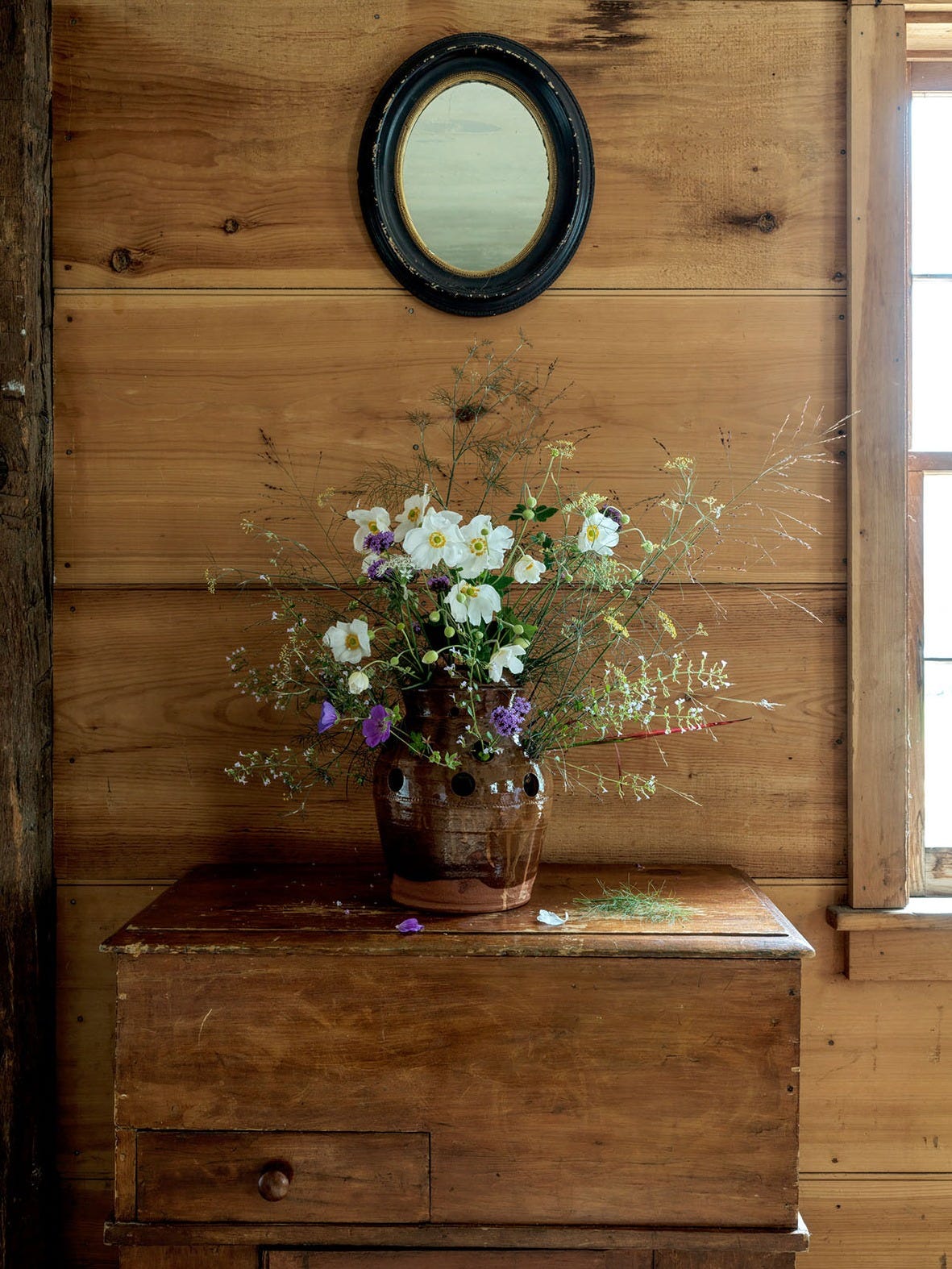
Redware and Wrought Iron with Roseland. Potter Michael Ray has dug wild clay from the Appalachian foothills and thrown several 19th-century–style vases for us, along with Clare’s salt pig and giant gravy boat. All are available here, along with our wrought iron lamps, fire tools, and martini tables.
Buffalo Fluffalo. On Saturday, November 22nd, best-selling author Bess Kalb is giving a reading of her children’s book Buffalo Fluffalo and Puffalo. Come for the story, stay for games. Bring all your children. RSVP here.
40th Annual Festival of Lights. On Saturday, November 29th, Pine Plains invites the community to decorate its town center. As is tradition, Ibis Guzman will be MC-ing the parade from our balcony. We will be serving chili, cornbread, and cookies on the porch from 3–5 p.m. Meals are $10. All proceeds benefit the town of Pine Plains.
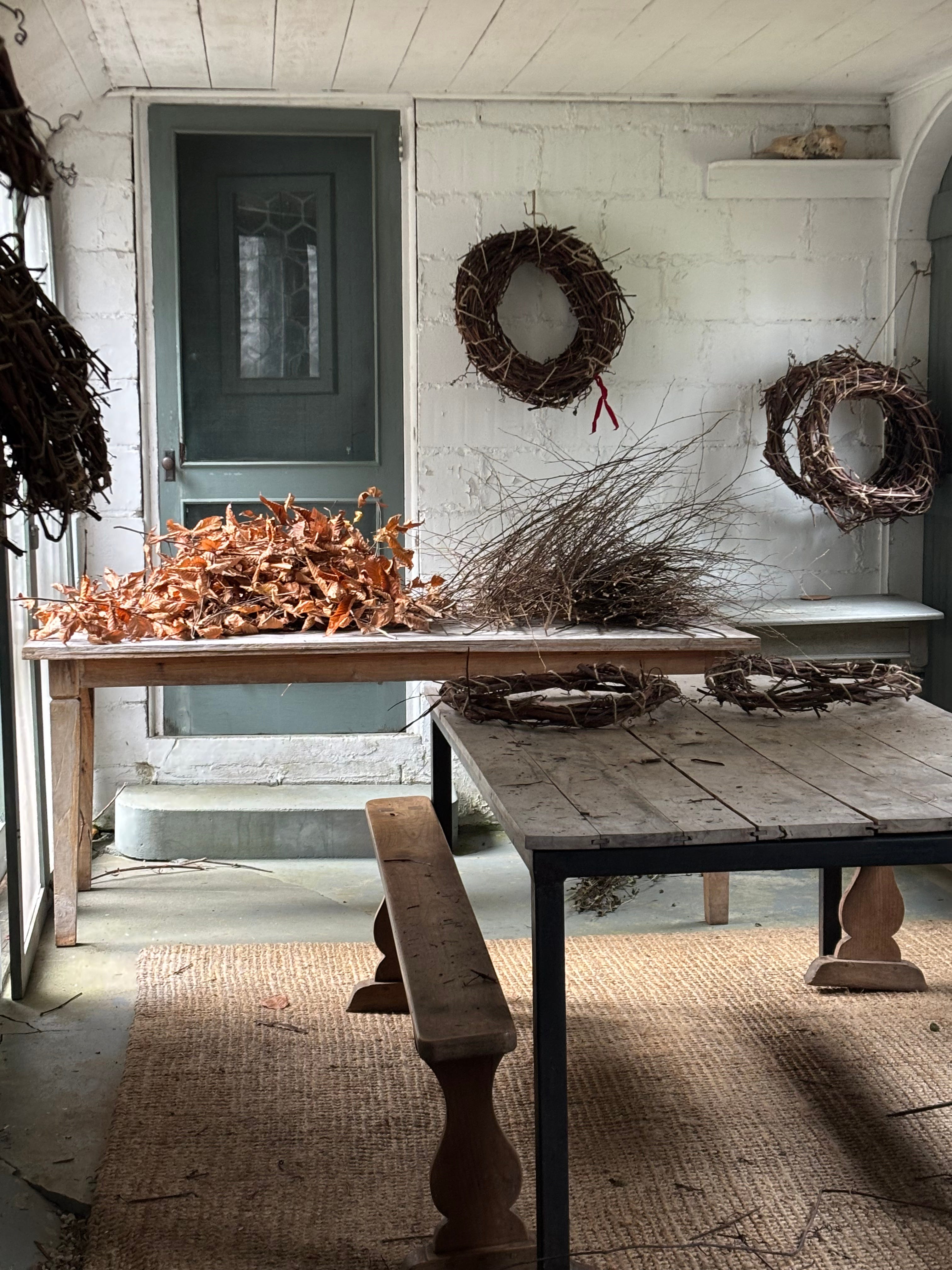
Wreaths and Winterberry. For those of you attending Craft Feast, you can preorder a James McGrath wreath here, or a bale of winterberry. (Interview with James to learn more below.)

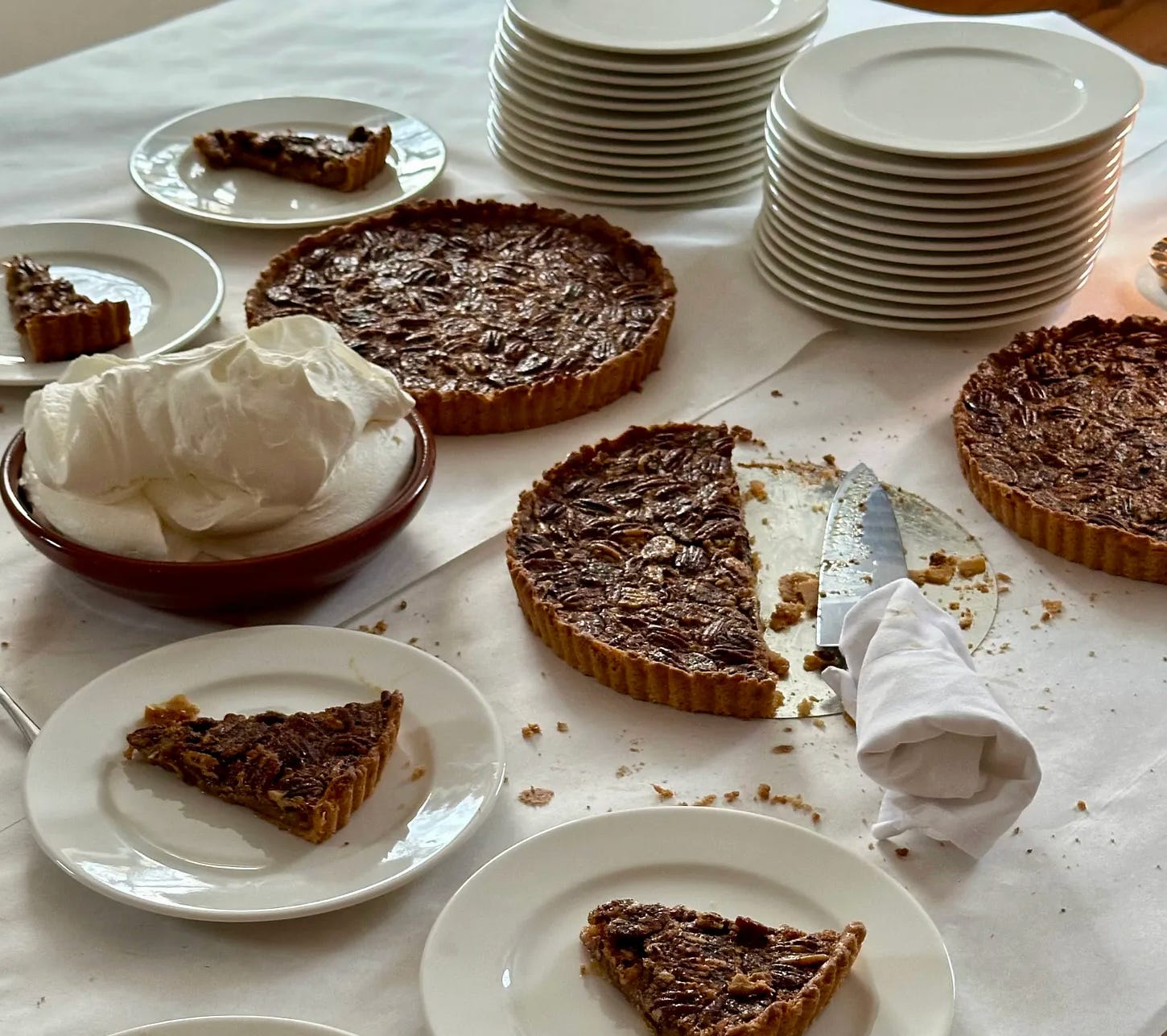
It’s pie season! Here are a few of the recipes that Clare has taught at Cooking School and written about on her recipe letter, The Best Bit: Shortcrust, Caramelized Pumpkin Pie, and Pecan Tart. The pumpkin one wobbles gently in a crisp shortcrust and tastes intensely of the vegetable itself. The pecan pie comes in tart form to rejig the ratios — in its wide, shallow shell, the caramel custard is submissive to the nuts; there’s just enough of it to glue good things together.

An Interview with James McGrath
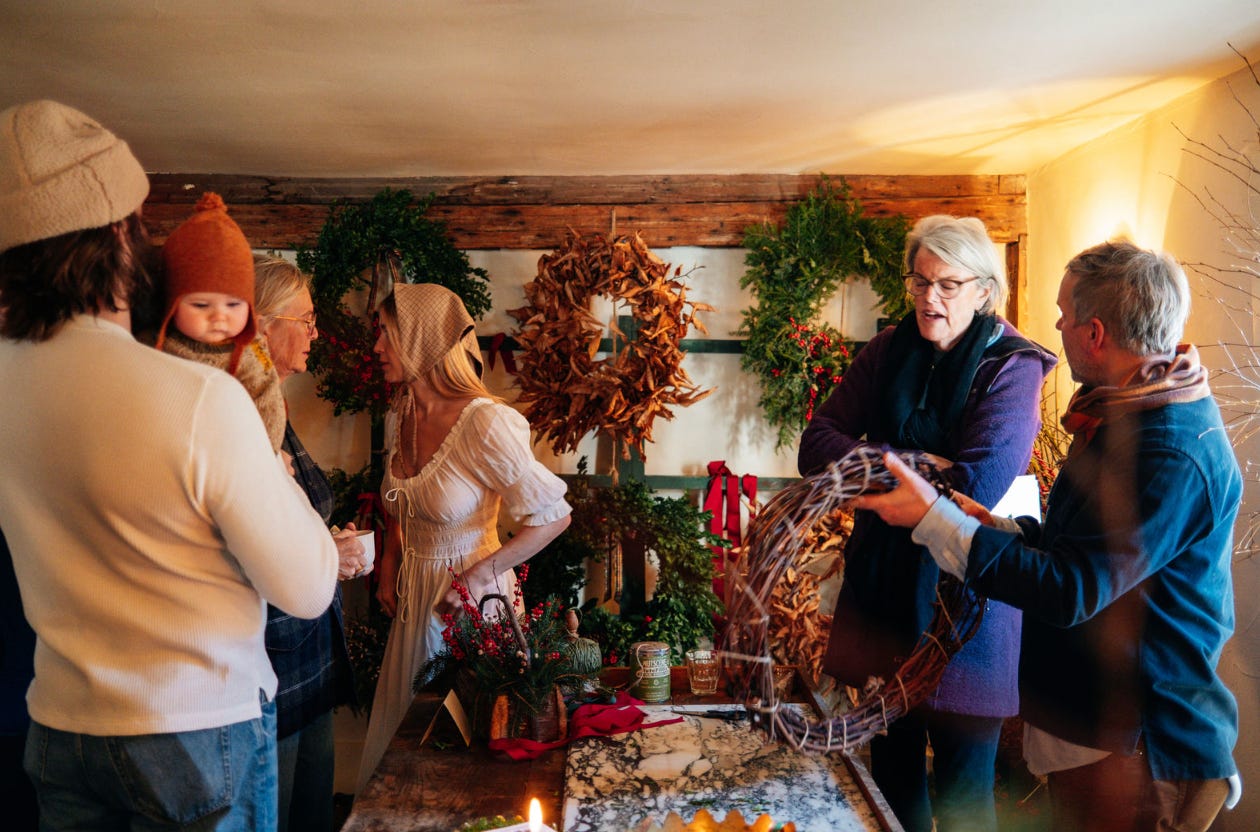
At last year’s Craft Feast, James McGrath delighted guests with his handmade wreaths, each a love letter to the land around him. For his first ever collection for sale, he crafted grapevine frames wrapped in compostable twine and layered each wreath with materials gathered near his cottage at Robin Hill. Materials like white pine, hemlock, boxwood, dried beech leaves, birch twigs, and foraged “jewelry” of seed heads and winterberries–100% compostable, a living work of art meant to return to the earth. One such wreath, made by James for Clare, made the cover of the New York Times Food Section–a great piece to revisit pre-Christmas planning.
For the past eight years, James had led a small team at Robin Hill, cultivating 20 acres of landscape and bringing British landscape designer Dan Pearson’s vision to life. But his path to horticulture began much earlier. Born and raised in the Bronx, James spent summers in Elizaville, NY gardening with his grandparents, and later tending plots with a neighbor in Brooklyn. What began as a pastime became a creative practice when James started to see gardening as a form of living sculpture, a natural extension of his fine arts education from FIT. By 2004, James had turned his passion into a full-time profession, cultivating private gardens from Manchester-by-the-Sea to the Hudson Valley.
When speaking with James, we were reminded of a rarely used word, philocalist: a person who loves beauty, finding and appreciating it in all things. At the heart of James’s work, which also includes decorating the house at Robin Hill for holidays, is a deep love of beauty–not just for how it looks, but for how it makes people feel. Whether arranging flowers for the house, tending the gardens, or crafting a wreath from found materials, he’s always looking for ways to make the experience more beautiful, more personal, and more alive. His creations capture the spirit of the season and the landscape, reminding us that beauty, like nature, is meant to be both seen and felt. Our conversation below illuminates his efforts.
What’s a valuable lesson you learned, or a core memory you have, from gardening with your grandparents?
I grew up in the Bronx but spent summers in the Hudson Valley with my grandparents, where my grandfather, PopPop, had a vegetable garden. Starting when I was maybe six or seven, every year when the cucumbers bloomed we would push a little cucumber into a bottle for it to grow. When it was mature and filled the bottle, I would twist it off the vine and take it around to ask the adults if they could figure out how it got in there. So from PopPop I got a love for growing things, and also a mischievous nature. He taught me how to have fun in the garden.
What can gardening teach us, as individuals and as communities?
Gardens teach us how to exist within larger communities – how to live within nature, how to collaborate with colleagues and professional peers, how to share extra flowers and fruit with neighbors. A garden teaches us that when we put in the work, gifts come back to us in unexpected ways.
In a world that sometimes sees beauty as superficial, what does beauty mean to you?
I was taught by a very wise woman, Susan Sheehan, that beauty is holistic. My aesthetic ideal is simplicity, but beauty is not just about the eye; it’s important that it evoke emotion. Beauty exists to nurture a deeper sense of self. Beauty makes us enjoy life. That is an idea I try to carry through all my work.
What daily (or weekly, etc.) ritual sustains you through the busy growing season?
My essential ritual is a daily walk through the garden as an observer, to move through the entirety of the garden without tools in hand and without a notebook to make a list of the work to do. The practice keeps me in touch with what’s happening in the garden: what’s blooming right now and how does this year differ from last year, for example. From one season to the next, walking in the garden becomes like walking with an old friend. But the real point of the practice is that my walks allow me to experience the garden as a guest would – without tools in hand – which allows me to look, understand, and feel the emotional response of the people I make the garden for.
Tell us about your dream garden party:
I’ll tell you instead about a party I threw in early October to celebrate my birthday. I’m fortunate that my birthday coincides with my favorite time of the year, when everyone is so eager to savor what’s happening in the natural world because we know time is fleeting. I invited a few friends over and we sat outside for lunch in the autumn sun behind the cottage where I live. I had created arrangements of native asters and crabapple branches, and the food included a seasonal menu of cornbread-crust chicken pot pie, glazed turnips, and watercress salad. After the main course, as the sun dropped, we moved over to the outdoor fire pit. We watched the moonrise as a flock of geese overhead were flying south for the winter, calling to each other in the dusk. We then proceeded inside for dessert, a birthday cake made by my dear friend, and calligrapher extraordinaire, Melissa. For me, the party wasn’t so much about celebrating my birthday as it was us celebrating the time of year and the love of close friends. That’s my dream garden party. Plus – lots of Champagne.
The last thing in the garden that surprised you:
For several seasons I’d been trying to establish Spiranthes, one of our native orchids, in the woodlands section of the garden. One day my colleague Lily found it growing in a meadow where I hadn’t thought to look for it. I was so surprised and delighted: while I was working to get it established, it had been growing there all this time.
What’s an unusual source of inspiration for your garden pursuits?
I just went to the apple-geek gathering Cider Days, billed as a “pomological exhibit” by the organizer known as Gnarly Pippins, which is devoted to recovering and popularizing antique varieties. The deep dive into esoteric pomology with hardcore apple enthusiasts was inspiring because it reminded me to always keep looking for possibilities beyond that which is easily accessible, readily available, and boringly expected.
The holiday decor element you never skip:
Wreaths, of course. Wreaths celebrate the holidays by using material from your local landscape. It makes traditional celebration personal and makes you feel connected to what’s available to you from the earth. A homemade wreath, especially, brings everything full circle—if you’ll forgive the pun.
Post-holidays, when all is quiet, describe your perfect day:
It would be an unfettered day—no appointments, no schedule, no plans. I’ll wake up after a good night’s sleep, have a pancake breakfast loaded with thick slabs of butter and rich local maple syrup while the woodstove is roaring and crackling next to me. Then I’ll look outside and it’s snowing, so I’ll go out for a long walk in the woods with Vita, my four-legged best friend. Then I’ll spend the afternoon reading, and some two-legged friends will come over for dinner. It’s all about pleasure and the coziness of wintertime, when you never have to leave the property.
A garden is such a sensory experience. What are some memorable scents, sounds, sights and feelings that stay with you?
Collecting plums in the Dutch countryside at the end of a long day, while the moon rose and inquisitive cows gathered around me and my plum-laden baskets.
IN THE GARDEN
Favorite plant or flower: Lilium canadense – it’s such a rare treat to see them in the wild. All of that beauty out of a single small bulb.
Most underrated plant or flower: Oxeye daisy — it evokes such a sense of nostalgia. It’s how you draw your first flower as a child.
Gardening clog or boot of choice: Blundstone boots for everyday work, and Gardenheir clogs when I’m at home and need to run out to cut a few bits and bobs for the house.
Must-have gardening tools: A glove clip that connects my gardening gloves to my pant loop. It is very inexpensive. It may seem like a strange gardening tool to speak of, but it has saved me from losing so many pairs of gloves (which happens to all my gardening friends that don’t use them!).
Guiding resources: I’m always looking through old books in second-hand bookshops to see how gardens and pastoral landscapes were done in earlier times, anything that creates a feeling of nostalgia I can apply in designing my gardens. I look to the past because I’m inspired by the feelings of yesterday.
The last thing you Googled: Where to go for my winter vacation.