

JULY
The last bits of July; weaving, dilly beans and bees


July goes by as quickly as December—holidays, birthdays, friends and family in town, beach escapes—all of it. We've been so busy we nearly forgot to hit send here, but we couldn't miss the chance to bottle up what the month has given us and share what's ahead.

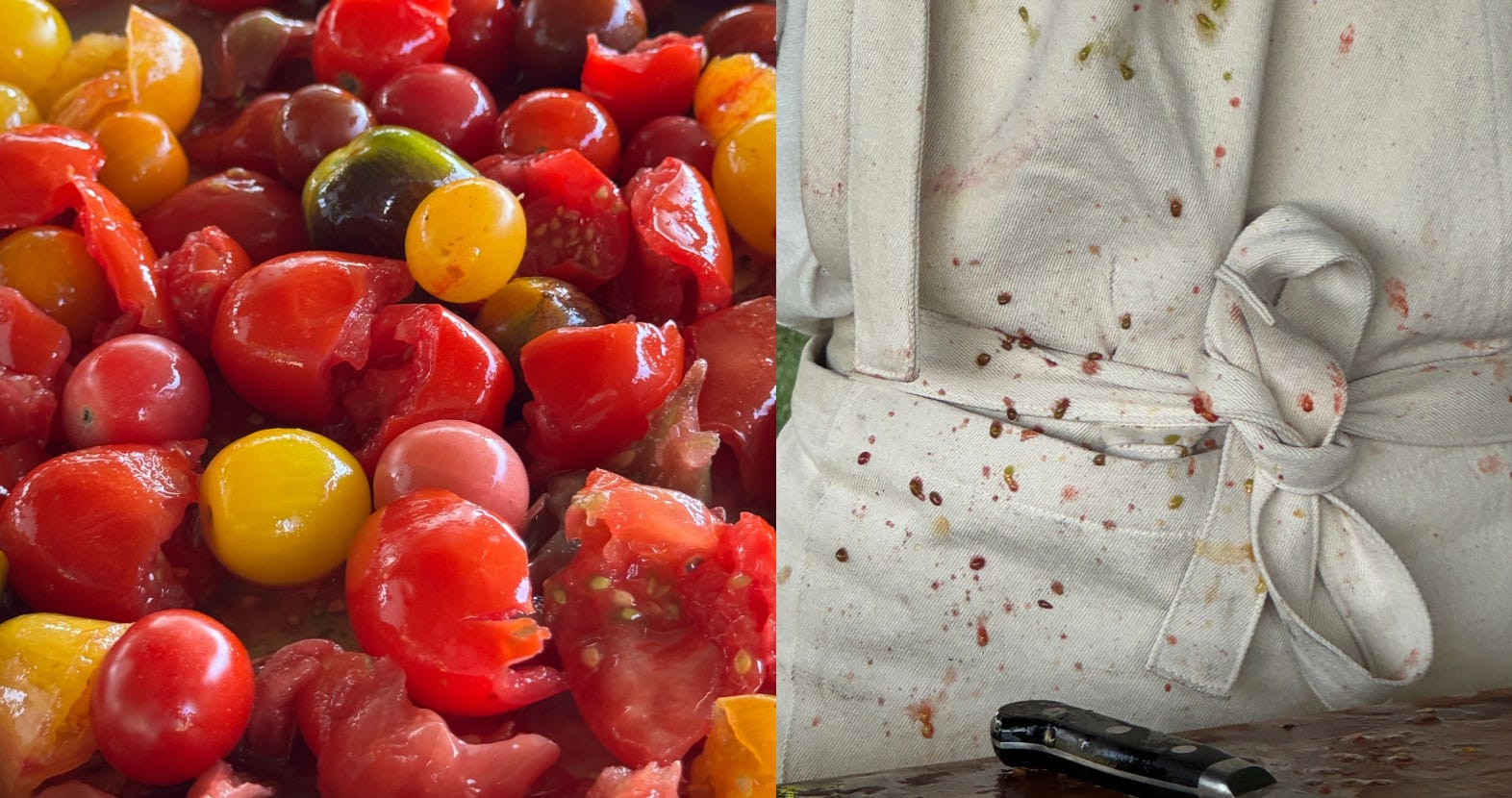
Weaver’s who lunch. Jes Clark of Willow Vale Farm and Wendy G. Jensen are two of the finest local weavers we know. We've invited them both to teach us their craft over a country lunch. Reserve your seat here for either of their upcoming gatherings.
Outstanding in the Field. On August 30th, the tavern returns to pasture for the evening with Outstanding in the Field and Osmote Wine. Expect wood-fired everything in the 18th-century farmed fields of Hilltop Hanover Farm. Reserve your seat at the table here.

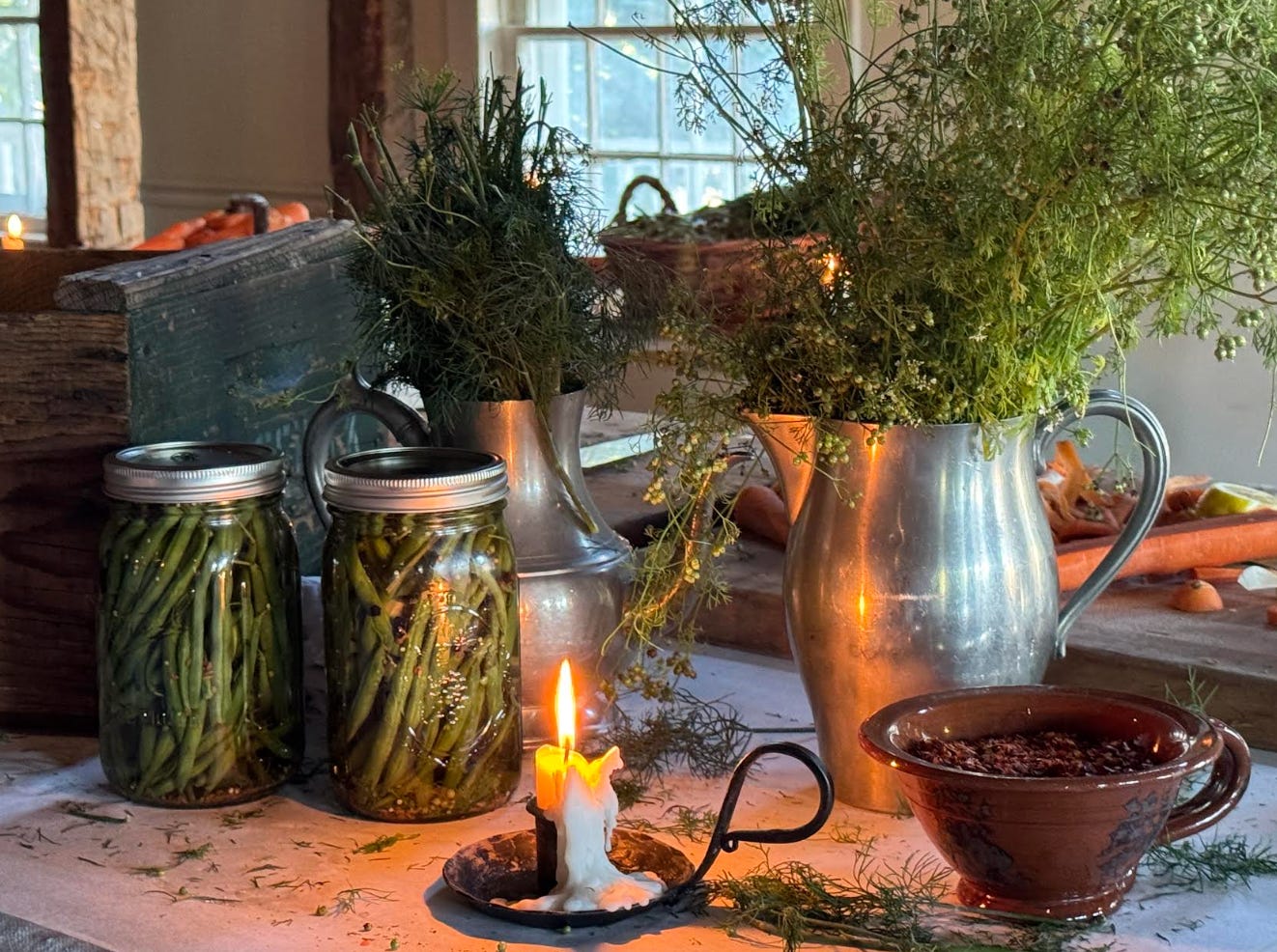
Dilly Beans! Though we're all about preservation here, these pickled green beans are best eaten cold the day after you make them. They'll be on our pickle plate soon...
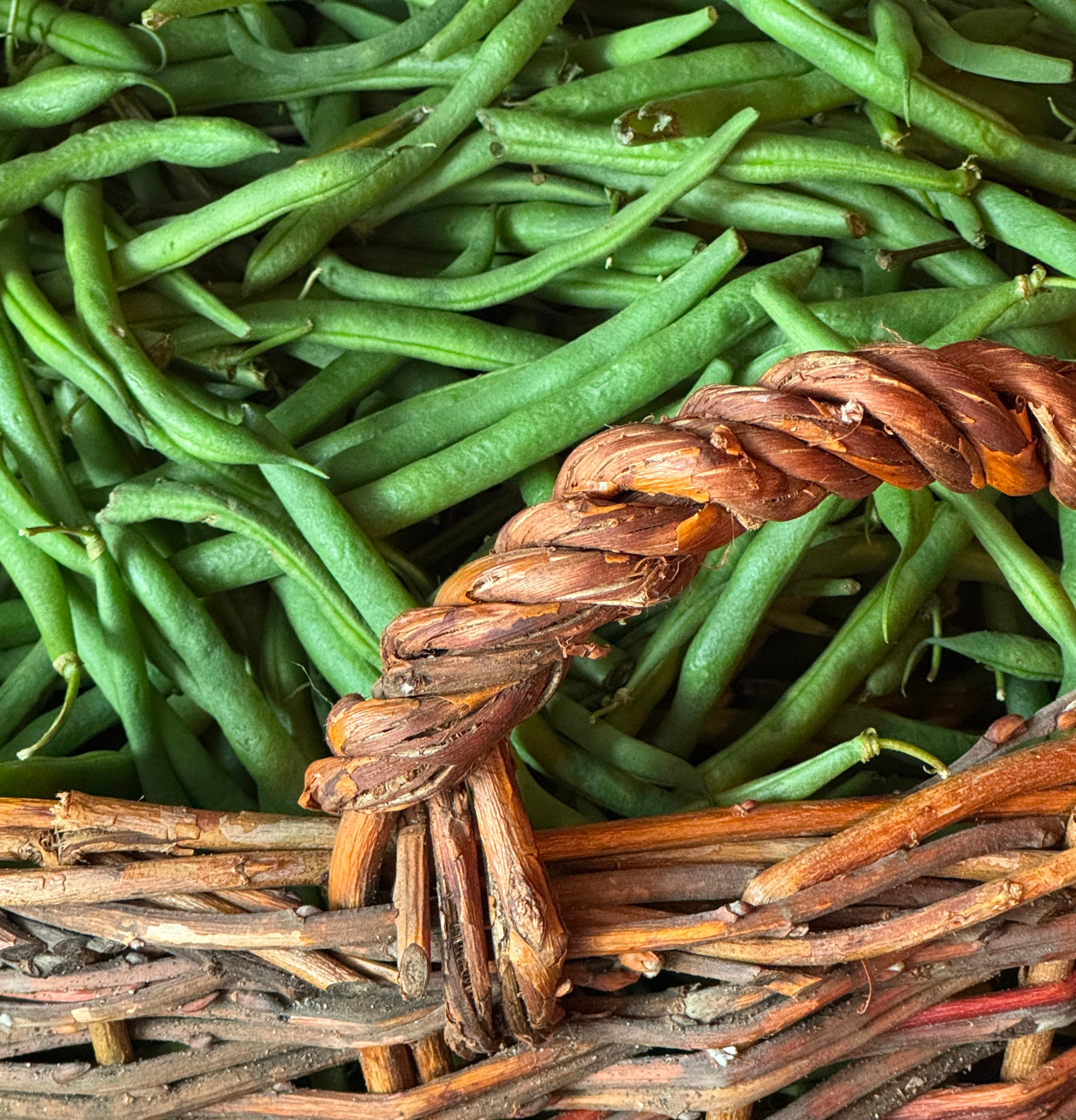
A Note of Thanks to our 2026 Cooking School Students. Thank you, thank you, thank you to everyone who filled our classroom in support of Willow Roots this summer. All proceeds from the classes have gone directly to Willow Roots' food pantry project and are absolutely essential as they relocate down the road.
The donation link is always here.

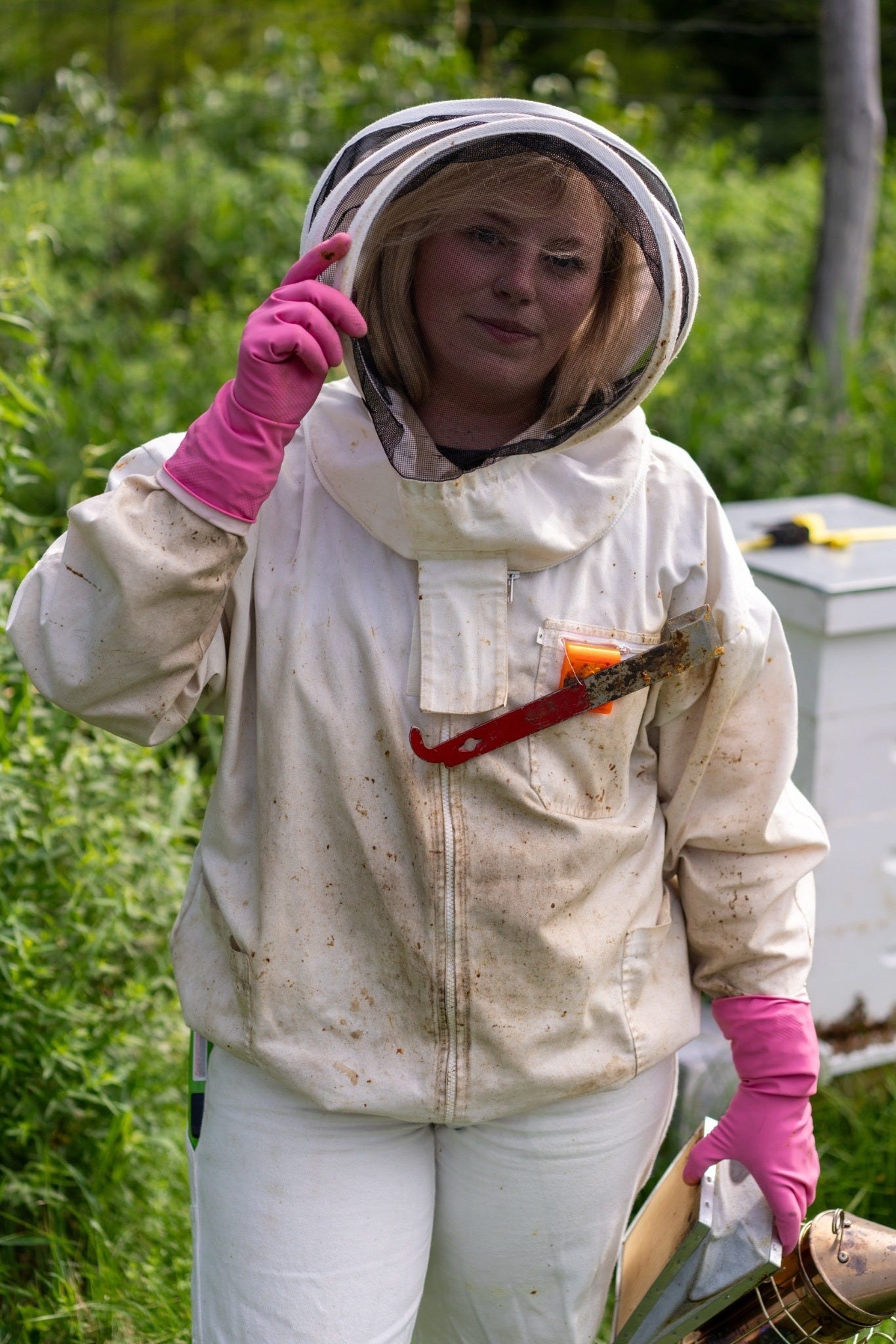
An interview with our very Meg Bertram of Dutchess County Combworks.
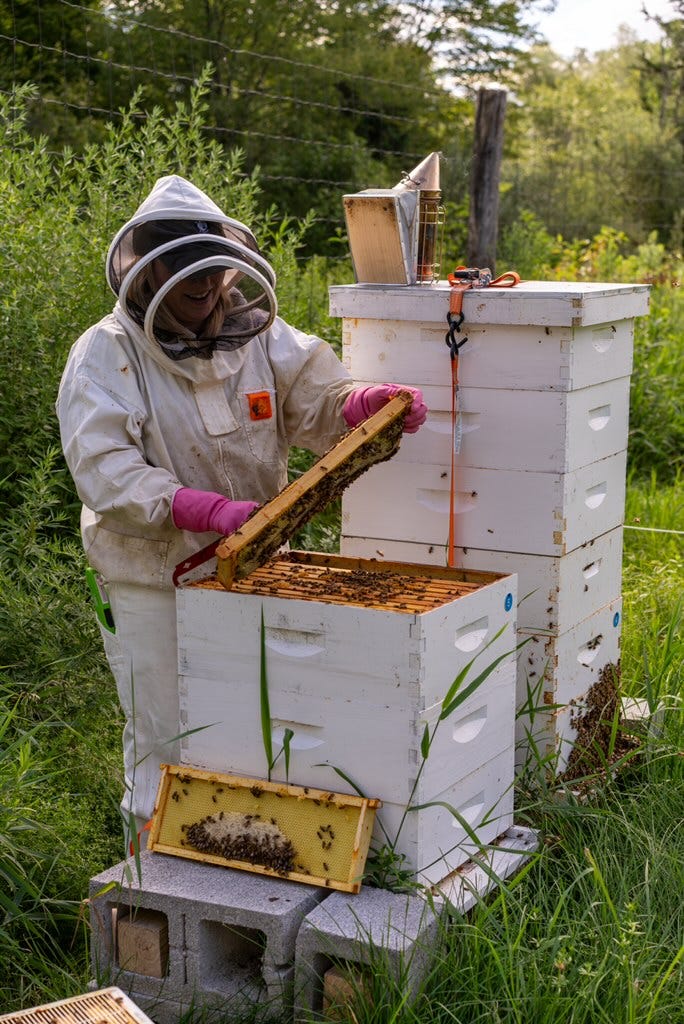
Photo by Charlotte Woolf
There’s something about Stissing House that attracts a certain kind of person—someone who shows up, does the work beautifully, and is also quietly building something extraordinary on the side. Point to almost anyone on the floor on any given night and you’ll find a second life to be curious about. For server Meg Bertram, who joined us a little over a year ago, her second life as a beekeeper has quietly become her first.
Meg is a CIA-trained chef with an associate’s degree from the Greystone campus in St. Helena, CA and a bachelor’s from Hyde Park. She has spent the better part of a decade moving fluidly between back of house and front, ghost kitchens (during the pandemic), Greenwich catering companies and country cafes. Coming out of the pandemic, something she’d been circling since her time in St. Helena came into focus: honeybees. She completed a full season-long apprenticeship with a beekeeper in Queens who keeps hives on top of the Javits Center and in Greenwood Cemetery. And when she finally moved to the Hudson Valley, she started her first two hives in her mother’s backyard in Stanfordville. Those two hives have multiplied to thirteen. And through her business, Dutchess County Combworks, she and her beekeeping partner Dina manage over 70 hives across ten private clients, thirteen apiaries, and some of the most forage-rich land in Northern Dutchess County.
Meg works Sunday and Monday nights at Stissing House—a schedule she engineered deliberately to leave her days free for the bees. The rest of her year runs on a rhythm that would exhaust most people and seems to energize her: June honey harvest, two weeks teaching at a culinary camp in the Berkshires, private chef clients, the occasional 50-person barbecue, and come October, a winter soup subscription business with an honor-system stand at Foxtrot Farm. There’s also a long-simmering plan for an experience campground in Vermont with open-fire cooking workshops and hive tours. For now, though, all things bees. And then soup.
Some people fall into beekeeping gradually while others describe it as something they were always meant to do. Which feels true for you?
I think it was always waiting for me, even if I didn’t realize it at first. Growing up, my mom always encouraged my siblings and me to follow our passions and do what we love. Both of my parents have a strong work ethic and drive that they passed on to us. They taught us that if something is worth doing, it’s worth doing well, and that mindset gave me the confidence to pursue an unconventional path. When I discovered beekeeping, everything clicked. It combined food, agriculture, science, ecology, and craftsmanship in a way that made every interest I’d ever had feel connected. Looking back, it feels less like I found beekeeping and more like I finally found the thing I was meant to do. People ask me all the time how I got into beekeeping, and my answer is always, “Because I wanted to.” Almost everything the bees do makes sense to me. There’s always a reason behind their behavior. They have a mind of their own as a colony, and I can’t control them. I can only make suggestions. They’re busy, hardworking, in tune with the seasons, and they do what makes sense to them. I think that’s why I’ve always felt such a strong connection to bees.
You mentioned learning at CIA how dependent our food system is on bees, and not just honeybees which aren’t native to North America. What surprised you most?
I was surprised by just how interconnected everything is. We often think of bees only in terms of honey, but roughly one-third of the food we eat depends on animal pollination. At the same time, our native bees, which are incredibly important pollinators, often get overlooked because they don’t live in hives or produce honey. Learning that honeybees are managed livestock, while thousands of native bee species are quietly supporting our ecosystems alongside them, completely changed the way I looked at agriculture. It made me realize that supporting pollinators means protecting biodiversity as a whole, not just one species.
What’s the through line for you between the kitchen, the hives and the Stissing House dining room?
It’s all part of the same story. I’ve always been fascinated by where food comes from and I’ve always loved learning. That’s what drew me to study at the Culinary Institute of America, and it’s what led me to pursue my Master Beekeeper certification through Cornell. As a chef, I learned to appreciate ingredients. As a beekeeper, I learned where so many of those ingredients begin. And working in the dining room at Stissing House gives me the chance to help people connect with that story. The more time I spend with bees, the more I realize that every meal starts long before anyone walks into a restaurant. It starts with healthy soil, good farmers, thriving ecosystems, and pollinators. By the time someone sits down for dinner, so much work has already happened. I feel fortunate that my work lets me experience every part of that journey.
What do you think individuals and societies can learn from honeybee colonies?
One of the things I admire most about honeybees is that almost everything they do has a purpose. Every bee has a role, but that role changes depending on what the colony needs. They aren’t rigid. They’re constantly adapting. I don’t think humans should try to become honeybees. We’re very different. But I do think there’s something to be learned from paying attention, adapting when circumstances change, and remembering that we’re usually part of something much bigger than ourselves.
What have the bees taught you personally?
Patience, more than anything. Bees operate on their own timeline, not yours. You can’t rush a queen to mate, flowers to bloom, or honey to ripen. Nature doesn’t care about your schedule, and the bees have taught me to accept that instead of fighting it. They’ve also taught me humility. No matter how much experience you gain, the bees will remind you that nature always has the final say. Every season is different, every colony is different, and there’s always something new to learn. I think that’s one of the reasons I love beekeeping so much. The moment you think you’ve figured it all out is usually the moment the bees prove you wrong.
What’s the greatest threat to honeybee populations?
It’s difficult to point to just one threat because honeybees face what’s often called a “death by a thousand cuts.” Habitat loss, pesticide exposure, poor nutrition from large monocultures, climate change, and parasites all weaken colonies. The single greatest biological threat is the varroa mite, an invasive parasite that wedges itself between a bee’s protective body plates and feeds on its fat body, an organ essential for immunity, nutrition, and overall health. As if that weren’t enough, varroa mites also transmit viruses throughout the colony, and without proper management they can ultimately lead to its collapse. Like most things in nature, it’s rarely one factor that causes a colony to fail. It’s the cumulative stress of many challenges happening at once.
Do you practice any rituals or routines while caring for the 70+ colonies you and your partner manage?
I always pause for a moment before opening a hive. It’s less about ritual and more about intention. I observe what’s happening at the entrance and remind myself that I’m entering their home. That small pause helps me slow down, notice details I might otherwise miss, and approach the colony with respect instead of rushing through an inspection. You can tell a lot about a hive before you ever lift the lid. Bees returning with pollen usually mean the colony is raising brood and the queen is laying well. A weak colony being robbed by stronger bees leaves clues at the entrance too. Even the guard bees can tell you what kind of mood the colony is in. Once I open the hive, I talk to them. I announce myself. I soothe them. Sometimes I hum. Sometimes I reassure them. Sometimes I confide in them. There’s an old tradition called “telling the bees,” where people believed you had to share important life events like births, marriages, and deaths with your colonies. Otherwise, they might leave, stop producing honey, or die. I’m not usually superstitious, but I’m not interested in testing the theory.
Why should someone consider adding bee colonies to their property?
Honeybees are fascinating, and there’s nothing quite like opening a hive full of healthy, thriving bees. Keeping bees gives you a front-row seat to one of nature’s most remarkable superorganisms, helps connect you more deeply to the seasons, and, of course, rewards you with honey that truly reflects the landscape around you.
That said, beekeeping is not a set-it-and-forget-it hobby. You don’t just go into the hives once a year to harvest honey. Honeybee colonies are livestock and require year-round management, so they’re not the right fit for everyone. From April through October, I’m inspecting our colonies every two weeks. That means monitoring population growth, adding and removing boxes as needed, adjusting entrances, testing and treating for pests and diseases, preventing swarms, maintaining electric bear fencing, harvesting honey, and occasionally responding to bear damage. During the winter, inspections become less frequent but don’t stop. We’re winterizing and de-winterizing colonies, clearing snow from hive entrances, checking fence voltage, hefting hives to monitor food stores, and providing supplemental feed when necessary.
I don’t mean to scare you... but I do. There’s a saying in the beekeeping community: “You are your neighbor’s beekeeper.” Poorly managed colonies can spread pests and diseases to neighboring apiaries and native bee populations. So if you’re thinking about getting bees, read the books, watch the videos, join a local club, find a mentor, and make sure you know what you’re doing before you bring home your first colony. Or, if you’d rather enjoy the benefits without taking on the responsibility, consider having a beekeeper professionally manage hives on your property instead.
Honey 101
Favorite varietal: If I had to choose one, it would be the Bouquet Blossom Honey from the bees at Foxtrot Farm & Flowers. The farm has such a diversity of nectar sources because Kate intentionally plants early-blooming flowers that support pollinators throughout the season. Sometimes when I open the hives, they even smell minty from all the mountain mint the bees have been foraging. Those floral sources come through in the finished honey, giving it a subtle cooling quality and jammy notes from the farm’s pick-your-own raspberries. It’s one of my favorite examples of how you can truly taste a place through honey.
Favorite way to use honey: I love letting honey speak for itself. I mostly use it as a finishing ingredient. I’ll drizzle it over yogurt, whisk it into a vinaigrette, spread it on toast, or just eat it by the spoonful. Raw honey is one of the few foods that comes straight from the hive to the jar with almost nothing done to it. Heating it too much starts to break down some of the naturally occurring enzymes and other compounds that make honey honey, so I prefer to enjoy it as close to its natural state as possible.
Health benefits of raw, unfiltered honey: Raw, unfiltered honey contains naturally occurring enzymes, antioxidants, and trace amounts of pollen. Many people swear by local honey for seasonal allergies, but the research hasn’t shown a clear benefit. The two uses that are well supported by science are cough suppression and wound healing.
What should people look for, or avoid, when buying honey: The biggest red flags are a sour or off-putting smell and bubbles. Honey shouldn’t ferment. If it does, it usually means it was harvested or bottled with too much moisture. Don’t be alarmed if your honey crystallizes. In fact, take it as a good sign. Raw honey naturally crystallizes over time, especially in cooler temperatures. It hasn’t gone bad. Simply place the jar in a warm water bath until it returns to a liquid state. Skip the microwave. And one last thing...honey in a bear-shaped bottle just feels wrong. Bears destroy apiaries. It feels like a bit of a mockery.
Must-have beekeeping reference or resource: Community! Beekeeping is one of those pursuits where you’ll never stop learning, and having a network of experienced beekeepers is invaluable. I’m one of about 100 members of the Northern Dutchess Beekeepers Club. We have great monthly speakers covering all kinds of topics, from seasonal management to the latest research. We also host potlucks, barbecues, and “hive dives,” where we visit one another’s apiaries to see different setups, ask questions, troubleshoot problems, and learn from each other.
I’m also lucky to have Hudson Valley Bee Supply right across the river. Those guys are incredibly knowledgeable, and it’s nice knowing they’re just a phone call away whenever I need advice or supplies. And if you’re curious about bees, stop by the Northern Dutchess Beekeepers Club booth at the Dutchess County Fair. Our volunteers would love to chat with you, answer your questions, and help you learn more about the fascinating world of honeybees.
Pricing for the upcoming "Outstanding in the Field" dinner at Hilltop Hanover Farm) is indeed outstanding: $400. The organization behind this event, per their website, was founded as "a radical alternative to the conventional dining experience", to "reconnect diners to the land while celebrating the hardworking hands that feed us" Oh please. Another example of societal affluenza, a world for those inside the bubble of luxuries, wealth, privilege, etc. Count me out.
Many thanks to Stissing House for the cooking class benefiting Willow Roots and for the active links to the website and donations. It is Willow Roots mission to support our community with food and clothing while maintaining their dignity. Community partnerships like this are crucial for that support. 🌻